This course is taught in an active-learning format, which means that students are responsible for reading or watching all of the materials below before the corresponding class. In active learning courses, students are involved in discussion, writing, problem-solving, and higher-order thinking during class time. The active learning activities that are planned for each class are shown below.

Make sure to read, watch, or listen to all content on each tab before the corresponding class!

If you are a FISH 521 student, this website will be your resource for all course content, but we will use Canvas for announcements, submitting assignments, and keeping track of grades.


Navigating a slide deck

  • Use the arrow keys (←/→) on your keyboard to go forward or backward
  • Press the “o” key on any slide to show you an overview of the slide deck
  • In overview mode, click on a slide or press “esc” to zoom in on it
  • You can also print the slides to a pdf by selecting the “print” option from your browser’s File menu.


Classes


Class 1: Skills to get up and running

Topics to be covered:

  • Course overview
  • Building a mentorship network
  • Time management
  • Writing habits
  • Searching the literature
  • Reference management
  • What do you want to learn this quarter?

Required readings:

Required videos:

In-class activities:

  • In-class presentation
  • Developing a time management system that works for you
  • Creating your mentoring map
  • Developing your literature search strategies
  • Subscribing to journal table of contents alerts
  • Choosing and setting up a reference management system
  • Brainstorm: what else do you want to learn this quarter?


Class 2: How to do science

Topics to be covered:

  • How to ask scientific questions
  • Structuring a proposal
  • Using a message box

Required readings:

Required videos:

In-class activity:
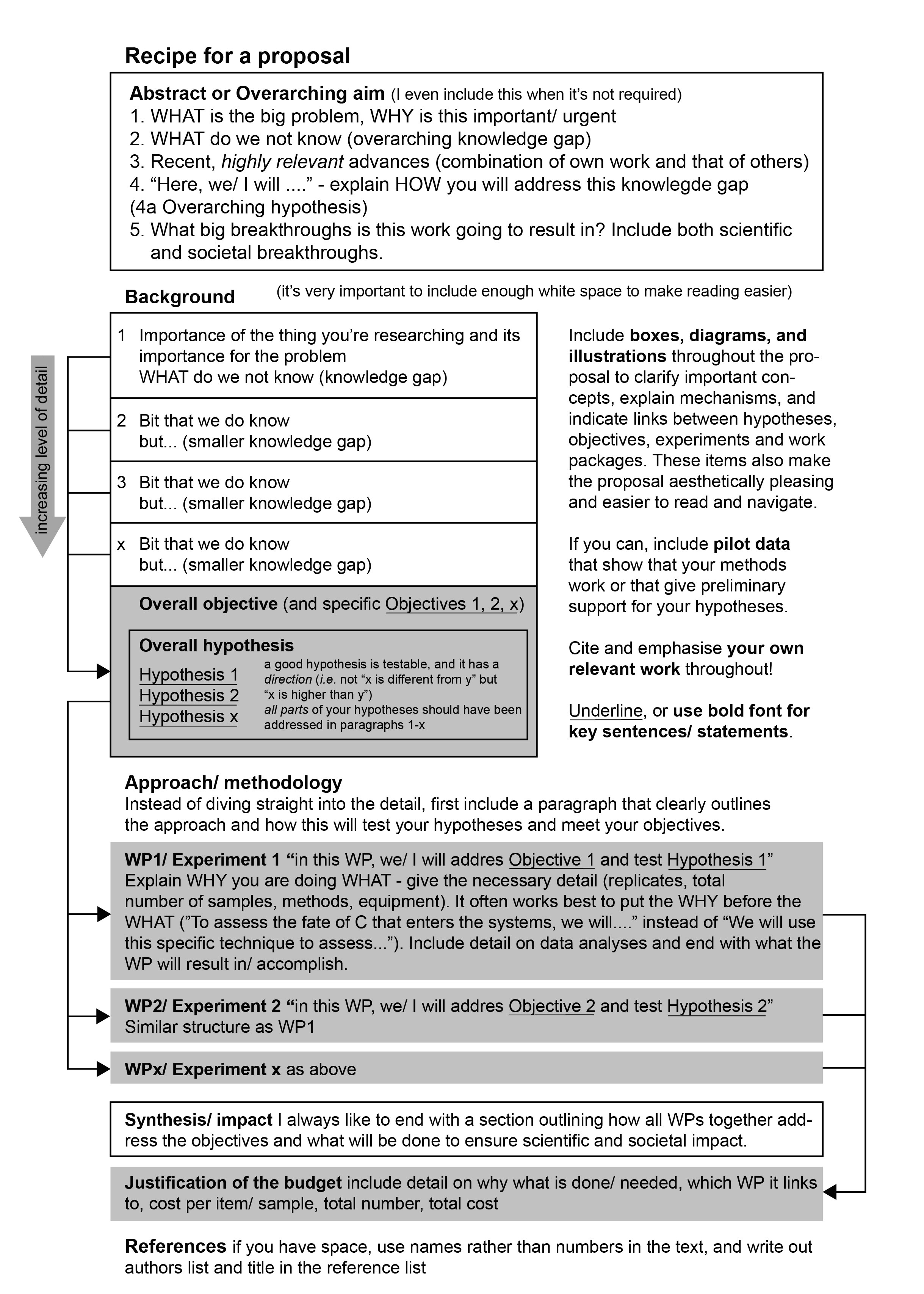
  • In-class presentation
  • The scientific method
  • Trade-offs between certainty and scope of inference in experimental design
  • Proposals
  • Craft your message using a message box


Class 3: Writing a manuscript

Topics to be covered:

  • Manuscript structure
  • Writing an abstract
  • Manuscript life cycles (including response to reviewers)
  • Authorship and contributions

Required readings:

Required videos:

In-class activity:


Class 5: Reviewing a manuscript

Topics to be covered:

  • Reviewing a manuscript or proposal

Required readings:

Required videos:

Required preparation:

You have been assigned to review two real-life proposals submitted to funding agencies by Chelsea: either Proposals 1a and 1b or Proposals 2a and 2b. Here are the proposals:

Within each pair of proposals, one was funded and one was not. Your job is to provide a review of each proposal, using the NSF template (see NSF review criteria for details of what to look for). You do not need to submit your review, but you should complete it because it will prepare you to engage in the mock panel we will hold in class. For each pair of proposals, the panel will decide which to fund. I’ll tell you at the end of class whether you chose the same proposal that the funder chose.

In-class activity:


Class 6: Communication

Topics to be covered:

  • How to give a scientific presentation

Required readings:

Required videos:

In-class activity:


Class 7: Practice proposal presentations + websites

Topics to be covered:

  • Your practice proposal presentations! Sign-up with your uw.edu identity here.
  • Web presence

Required readings:

  • Install Git
  • Creating a free website via Markdown
  • Online outreach
  • If you already have a professional website, please come to class prepared to work on it (make sure you have your password and whatever else you need to access it). If you don’t yet have a website, we’ll work through the process of using GitHub to launch a free website for you.

Required videos:

In-class activity:


Class 8: How to do it all

Topics to be covered:

  • Your final proposal presentations! Sign-up with your uw.edu identity here.
  • How to secure letters of recommendation and ensure that they are spectacular
  • (by popular request) E-mail etiquette
  • (by popular request) Special considerations for ADHD/AuDHD scientists
  • (by popular request) How to organize your stuff and find it again later
  • How to get what you want
  • How to do it all without overdoing it

Required readings:

Required videos:

In-class activity:


This site was last updated at 10:19 on 24 Feb 2026